
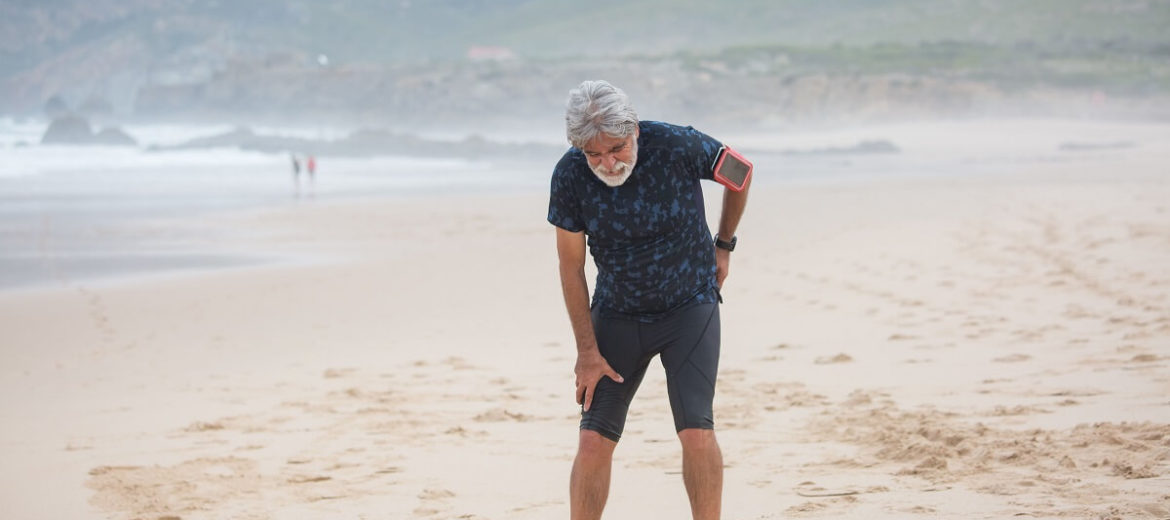
Does your back hurt? That means there must be some kind of problem with your back, right? Just like a sore knee tells you something is wrong with your knee and hip pain suggests an issue with your hips. These are all reasonable assumptions, but the human body is a complex, interconnected system. One muscle group affects another, and pain that you feel in one area may have its source in another area entirely.
One muscle group in particular is often overlooked as the cause of new pain that emerges. The glute muscles are among the body’s most important stabilizers, and weakness here often contributes to pain elsewhere. The glutes help control how the hips, pelvis, and legs move during everyday activities, and sometimes they can be the reason you experience pain in these other body parts.
What Are the Glute Muscles?
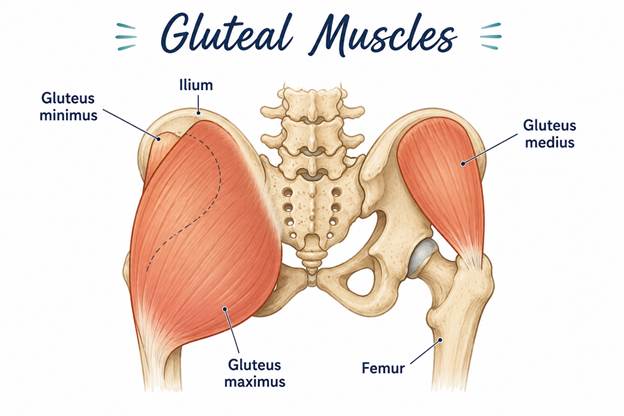
Your gluteal muscles (glutes) are some of the biggest and heaviest muscles in your body. At the bottom of your muscular core, this muscle system is composed of three main muscles. The largest is called the gluteus maximus, followed by the gluteus medius, and the smallest is the gluteus minimus1.
These muscles work together to support many different types of movement, from sitting down to walking, running, and jumping. While these muscles usually work together, each individual muscle plays a specific role in different types of movement. Some examples include:
- Gluteus maximus:
The largest and strongest of the muscles help you move forward by extending your thigh out away from your body. You use this muscle when you stand up, walk, run, or climb. - Gluteus medius:
The middle-sized muscles provide stability for your pelvis and help you move your thighs out from the center of your body (hip abduction). - Gluteus minimus:
The smallest of the gluteal muscles work closely with the gluteus medius to support and rotate the hip while also keeping the pelvis level and stable.
Whether you realize it or not, you are using these muscles continuously every day. Every time you sit down, stand up, walk, lift a leg to climb a stair, or do basically anything that involves the lower part of your body, your gluteal muscles play an important role.
Why Strong Glutes Matter More Than Most People Realize
Being at the bottom of so many of our body’s movements makes our glutes very important. Beyond the essential role they play in helping us move, they are also stabilizing the pelvis, maintaining alignments, and absorbing force. The gluteal region also provides a key conduit for important neurovascular structures passing through the area into the lower body2.
All of this means that weak glutes don’t automatically cause pain, but can increase the stress placed on other parts of the body. When your glutes are not keeping up with all that you’re expecting of them, you often experience it as pain somewhere else. For instance, you may feel it in your back, your hips, or your knees.
How Weak Glutes Can Contribute Pain Elsewhere
As mentioned above, the human body is a complex, interconnected system. Our movements typically involve many networks of muscles, tendons, ligaments, and joints working together. One of the most important and central parts of these interconnected systems is the muscle group we call glutes. Weak glutes will put extra pressure and stress on other body parts, often leading to pain or stiffness in the back, hips, or knees. For example:
- Back pain:
Weak glutes can lead to reduced mobility in the hips, which places extra pressure on your lumbar (lower back) region. This can lead to muscle fatigue, stiffness, or pain that you experience in your back. - Hip pain:
Gluteal muscles play an essential role in hip stability and movement. Weak glutes put unnecessary stress on tendons, bursae, and surrounding muscles. You may experience this as pain while walking or climbing stairs, or just as general soreness in the hip area. - Knee Pain:
Your glutes are a key factor in how your thigh or upper leg rotates. Weak glutes may allow your thigh to twist too far inward when you walk or run, putting extra stress on and around your knees. Muscle imbalances or weaknesses are often cited as a cause of patellofemoral pain syndrome (runner’s knee)3.
These are a few examples among many. Strong glute muscles often mean stable hips and good alignment, reducing the amount of stress placed on your back and knees. Of course, weak glutes are not the only cause of pain in these areas, but if you find yourself experiencing pain in your back, hips, or knees, don’t be surprised if strengthening your glutes is part of the solution.
Signs Your Glutes May Be Weak
You don’t have to wait until you’re in pain to decide if your glutes are too weak or not. There are other signs to look for. Of course, strengthening your glutes is a good idea even if they are already working well, but it may be especially important if you experience any of the following:
- difficulty climbing stairs
- poor balance
- hips dropping while walking
- knees caving inward during squats
- recurring low back pain
- recurring hip soreness
- recurring knee pain
- fatigue after standing
None of these symptoms alone proves that your glutes are too weak, but each of them may point in that direction. If you have questions or doubts about your personal glute weakness, contact a qualified physical therapist for an evaluation. A professional evaluation can assess your movement, flexibility, mobility, and more to determine whether your problems are stemming from your glutes or some other part of your body.
After your evaluation, your physical therapist will also be able to prescribe a customized plan to build the strength, flexibility, and mobility you need to deal with any pain or stiffness you are experiencing now and to avoid it in the future. Don’t hesitate to contact a physical therapist and schedule an evaluation to make sure your glutes are strong enough for the important roles they play in your daily life.
The therapists at Strive! Physical Therapy Centers have been helping our friends and neighbors overcome weakness and pain for more than 40 years. Call us at 352.690.7777 or email us today to schedule a consultation.
Sources
- “Gluteal Muscles (Glutes): What They Are, Anatomy & Function.” Cleveland Clinic, 26 Mar. 2025, https://my.clevelandclinic.org/health/body/gluteal-muscles-glutes.
- Elzanie, Adel, and Judith Borger. “Anatomy, Bony Pelvis and Lower Limb, Gluteus Maximus Muscle.” PubMed, StatPearls Publishing, 1 Apr. 2023, https://www.ncbi.nlm.nih.gov/books/NBK538193/.
- Mayo Clinic Staff. “Patellofemoral Pain Syndrome – Symptoms and Causes.” Mayo Clinic, 4 Mar. 2023, https://www.mayoclinic.org/diseases-conditions/patellofemoral-pain-syndrome/symptoms-causes/syc-20350792.